


When Geography Rules the Markets
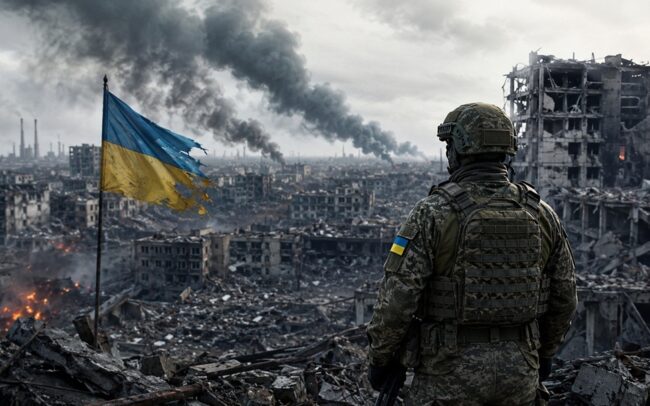
In 2026, global financial markets are no longer driven solely by macroeconomic data; they are increasingly shaped by geopolitical tension. After nearly four years of attritional warfare between Russia and Ukraine, the risk of escalation into broader European territory, and even a direct confrontation involving NATO, can no longer be dismissed as a remote scenario. This shift has triggered a critical question among traders and investors:
in the Russia–Ukraine war, what should we buy?
This is not a theoretical question. It sits at the core of capital allocation decisions that can generate outsized gains or devastating losses. When systemic risk rises, capital flows reprice rapidly, some assets transform into safe havens, while others deteriorate under pressure.
According to revised projections, Eurozone growth for 2026 has already been downgraded, yet these forecasts may prove irrelevant in the face of a major geopolitical shock. Some think tanks now assign a 25% probability to a broader escalation scenario. In such an environment, understanding asset behavior is not optional, it is essential.
This article approaches the question directly: what assets are likely to outperform in a full-scale geopolitical crisis involving Russia, Ukraine, and potentially NATO? Using a combination of fundamental analysis and geopolitical framework assessment, we identify not only the potential winners but also the underlying causal mechanisms driving price movements.
Gold: The Undisputed King of Safe Havens
Fundamental Analysis
Gold remains the apex safe-haven asset. Historically, it has functioned as a hedge against inflation, fiat currency debasement, and geopolitical instability. In a scenario where the conflict expands into Europe, gold benefits from multiple concurrent catalysts:
First, the expansion of geopolitical risk premium. In late January 2026, gold surged to an unprecedented $5,600 per ounce, with a significant portion of this rally attributed to sustained geopolitical tension. This “geopolitical premium” is now structurally embedded in market pricing.
Second, declining real interest rates. In the event of a systemic shock, central banks such as the Federal Reserve and the European Central Bank are likely to pivot toward accommodative policies. Lower real rates reduce the opportunity cost of holding gold.
Third, erosion of confidence in fiat currencies. A war on European soil would significantly undermine confidence in the euro, accelerating capital flows into gold.
Technical Perspective
From a technical standpoint, gold has already broken key resistance levels in 2026. In a war escalation scenario, price targets above $6,000 per ounce become plausible.
Silver: The Volatile Companion with High Upside
Silver, while more volatile, maintains a strong correlation with gold during geopolitical stress. Projections suggest that silver could reach the $120–$150 range under extreme conditions, driven by both safe-haven demand and industrial usage.
Crude Oil: The Lifeblood of War Economies
Fundamental Analysis
Oil is the most strategically critical commodity. In a scenario of expanded conflict:
Supply disruption becomes inevitable. Russia produces approximately 10 million barrels per day, and direct conflict with NATO would severely impair output and exports.
Sanctions would intensify. Existing sanctions have already forced Russia to sell oil at significant discounts to China and India. Escalation would tighten these constraints further.
Military demand would surge. Armed forces are among the largest consumers of fuel. A full-scale war would dramatically increase demand for refined products.
Price Scenario
The World Bank has already projected a 24% increase in energy prices for 2026 under current conditions. In an escalation scenario, Brent crude could easily surpass $150 per barrel, with some models suggesting explosive moves beyond $130 as an initial threshold.
FX Implications
Commodity-linked currencies such as the Canadian dollar (CAD) and Norwegian krone (NOK) would likely strengthen in the short term. However, in a full systemic crisis, the US dollar (USD) would dominate as the ultimate safe haven.
Natural Gas: Europe’s Structural Weakness
Fundamental Analysis
Europe remains structurally vulnerable in natural gas. Although dependence on Russian gas has decreased from 45% to approximately 13%, exposure is still significant.
In an escalation scenario:
Russian gas exports could be fully halted.
Energy infrastructure, including pipelines and LNG terminals, could become strategic targets.
Global competition for LNG would intensify, particularly between Europe and Asia.
Price Scenario
European gas prices (TTF benchmark) could reach extreme levels, surpassing the peaks observed during the 2022 energy crisis, especially during winter demand spikes.
Agricultural Commodities: When the Breadbasket Burns
Russia and Ukraine together account for roughly 30% of global wheat trade, 20% of corn exports, and 80% of sunflower oil supply.
In a war expansion scenario:
Agricultural production would be disrupted.
Black Sea export routes would be blocked.
Rising energy costs would increase production expenses.
Price Impact
Wheat prices, which already surged in 2022, could reach new all-time highs. This would exacerbate global food inflation and potentially trigger social unrest in import-dependent regions.
—
Strategic Industrial Metals: Palladium, Nickel, Aluminum
Russia is a dominant supplier of several critical industrial metals:
Palladium: Russia controls around 40% of global production, essential for catalytic converters.
Nickel: Key input for stainless steel and EV batteries.
Aluminum: Russia’s Rusal is one of the largest global producers.
Sanctions and supply chain disruptions would drive sharp price increases, impacting industries from automotive to renewable energy.
—
Forex Market: Currency Dynamics in Crisis
US Dollar (USD)
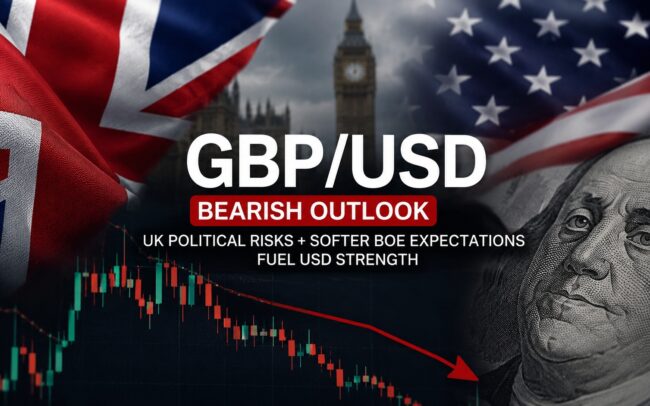
The dollar strengthens significantly during geopolitical crises. EUR/USD would likely face severe downward pressure, potentially entering a sustained bearish phase.
Japanese Yen (JPY) and Swiss Franc (CHF)
Both currencies traditionally act as safe havens. Their demand increases during global uncertainty, though Switzerland’s geographic position within Europe introduces unique considerations.
Euro (EUR)
The euro is the most vulnerable major currency. War in Europe would trigger capital flight, energy shocks, and trade disruption, all contributing to depreciation.
Russian Ruble (RUB)
The ruble’s trajectory is complex. While capital controls have supported it, escalation would likely exert significant downward pressure.
Alternative Assets: Bonds, Bitcoin, Defense Stocks
Government Bonds
US Treasuries and German Bunds typically rally in risk-off environments, driving yields lower.
Bitcoin and Crypto
Bitcoin’s behavior is mixed. It may initially sell off due to risk aversion, followed by a potential sharp recovery as a non-sovereign store of value.
Defense Stocks
Companies such as Lockheed Martin, Raytheon, BAE Systems, and Rheinmetall would likely experience strong gains due to increased military spending.
Final Perspective: Positioning for a Geopolitical Shock
A full-scale escalation involving Russia, Ukraine, and NATO is not the base case, but its probability is no longer negligible. In such a scenario, assets like gold, silver, crude oil, natural gas, wheat, palladium, the US dollar, Japanese yen, and Swiss franc are positioned to outperform.
Conversely, the euro, European equities (excluding defense), and emerging market currencies would likely face substantial downside risk.
For traders and investors, the strategic response is clear: diversify exposure, maintain liquidity, implement hedging strategies, and continuously monitor geopolitical developments. In modern financial markets, those who anticipate not only the probable, but also the possible, are the ones who outperform.