



Overview
In this week’s forex market analysis, the primary focus is on easing US inflation pressures and the strengthening expectations for Federal Reserve monetary easing in 2026, developments that are unfolding alongside an increasingly divergent stance among major central banks. Japan’s interest rate hike, the UK’s cautious rate cut, Europe’s policy pause, and mixed US data have created a complex environment of uncertainty and opportunity for currency traders. This article provides an in-depth review of last week’s market developments, the main catalysts for the week ahead, and a detailed outlook for major currencies, with particular emphasis on scenario-based analysis and directional bias.
Key Takeaways
- Softer US inflation and a weakening labour market have reinforced expectations of Federal Reserve rate cuts.
- The Bank of Japan raised rates to their highest level in 30 years, yet the yen weakened.
- The Bank of England delivered a rate cut with a cautious, relatively hawkish tone.
- European monetary policy remains firmly in wait-and-see mode.
- Thin year-end liquidity increases the risk of unexpected volatility.
Review of the Past Week
Last week, financial markets entered a phase of relative calm, though underlying fragilities remained evident. In the United States, labour market and inflation data played a decisive role in shaping market expectations. Employment figures showed limited non-farm payroll growth in November, while the unemployment rate rose to 4.6%, its highest level since 2021. At the same time, annual inflation printed below expectations, strengthening market conviction that interest rates will be lowered in 2026. However, concerns over data accuracy persisted, as the US government shutdown likely distorted data collection, raising questions about the sustainability of the disinflationary trend.
On the central bank front, the Bank of England cut interest rates by 25 basis points, but a narrow voting margin and cautious forward guidance signalled that the pace of further easing would be restrained. This communication supported the British pound. In Europe, the European Central Bank left policy unchanged while modestly upgrading its 2026 growth and inflation forecasts, reinforcing expectations that rates will remain stable for an extended period.
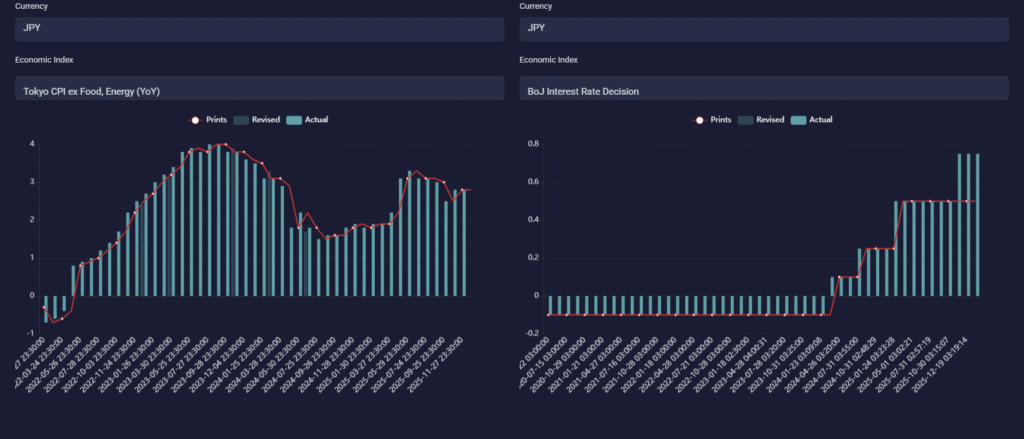
In Asia, the Bank of Japan’s decision to raise its policy rate to 0.75% marked a historic shift. Yet instead of strengthening, the yen depreciated, as markets interpreted the lack of clarity on the future policy path as a sign of continued caution. This disconnect between policy action and market reaction emerged as one of the most notable themes of the week and is likely to remain relevant in the days ahead.
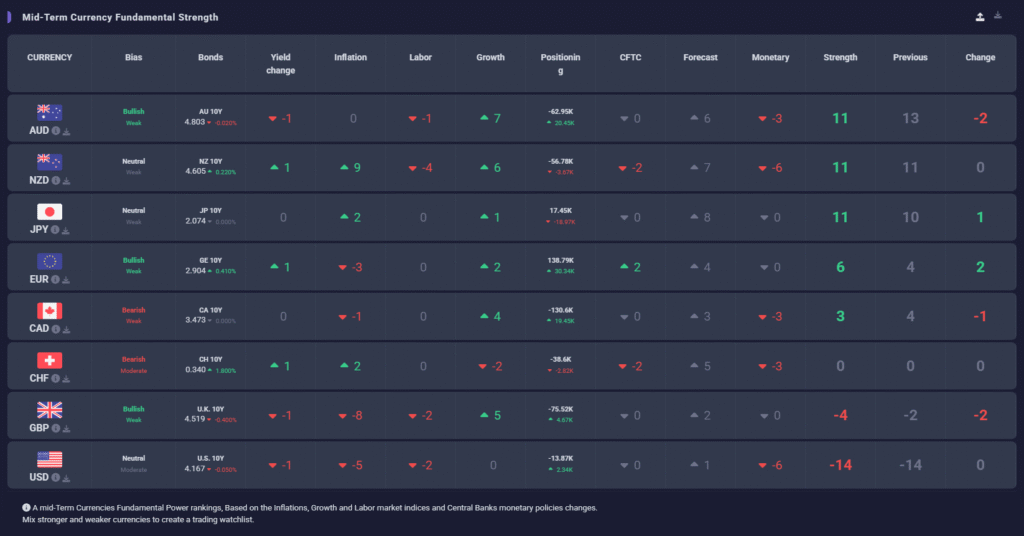
Market Update and the Week Ahead
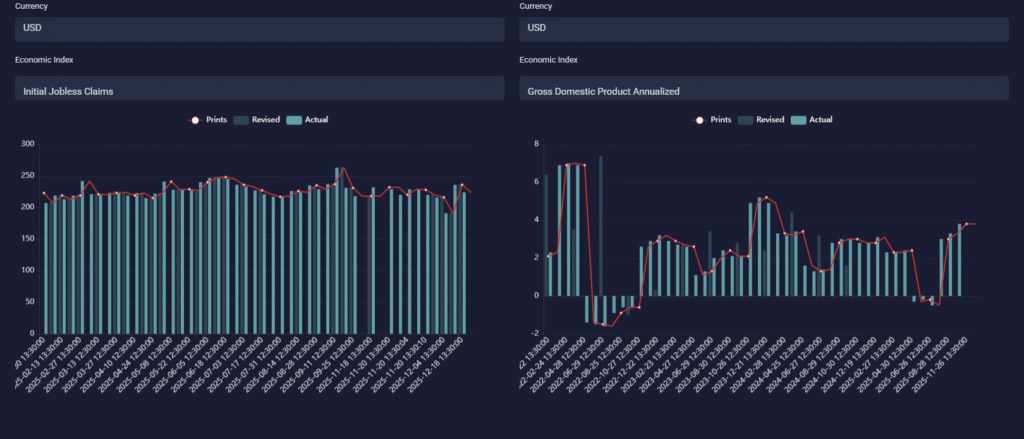
The upcoming week is characterised by thin liquidity and reduced trader participation, but this does not imply an absence of risk. Key US data releases, including the initial estimate of third-quarter GDP and durable goods orders, could exert an outsized influence on market pricing. In parallel, the release of the Bank of Japan and Reserve Bank of Australia meeting minutes will offer further insight into the monetary policy outlook for 2026.
The central question for the week is whether incoming US data will validate the prevailing narrative of rate cuts, or whether markets have moved too far, too fast. The answer will be critical in determining the near-term trajectory of the US dollar and, by extension, other major currencies.
Key Market Drivers for the Week Ahead
US macroeconomic data remain the dominant market driver. If third-quarter economic growth remains above expectations, it will amplify the apparent contradiction of rate cuts being priced in despite solid growth and inflation still above target. Conversely, signs of economic deceleration or weaker investment activity would further strengthen the case for monetary easing.
In Asia, attention is focused on Japan and Australia. Market participants are searching for evidence that Japan’s rate hike marks the beginning of a sustained normalisation cycle rather than a one-off adjustment. In Europe and the UK, data releases are expected to have a limited impact, as the broad direction of monetary policy is already well defined. Overall, low market depth increases the likelihood that even modest surprises could trigger amplified price reactions.
Currency Outlooks for the Week
🇺🇸 US Dollar (USD)
The US dollar stands at the intersection of conflicting macroeconomic signals. On one hand, softer inflation and rising unemployment have strengthened expectations for rate cuts in 2026, exerting downward pressure on the currency. On the other hand, economic growth remains above its long-term average, limiting the scope for a sharp decline. Should GDP and durable goods data disappoint, the dollar could face additional downside pressure. Conversely, stronger-than-expected data may trigger a short-term corrective rebound. Overall, the dollar’s bias for the week is mildly bearish.
🇯🇵 Japanese Yen (JPY)
The Bank of Japan’s rate hike failed to provide lasting support for the yen, highlighting market scepticism over the durability of policy tightening. If the upcoming meeting minutes do not offer clearer guidance on further rate increases, selling pressure on the yen is likely to persist. Only a more assertive policy tone or a renewed acceleration in Japanese inflation would materially improve the outlook. For now, the yen’s short-term outlook remains neutral to bearish.
🇬🇧 British Pound (GBP)
The pound weathered the Bank of England’s rate cut relatively well, as the accompanying communication emphasised caution and data dependence. This suggested that future easing would be limited and gradual. Weak growth or inflation data could prompt some retracement, but relative to the US dollar, the pound retains a degree of support. The near-term outlook for sterling is therefore neutral to slightly bullish.
🇪🇺 Euro (EUR)
The euro remains constrained by the European Central Bank’s steady policy stance and the absence of strong new catalysts. Upcoming inflation and growth data are unlikely to materially alter expectations. As a result, the euro’s performance is largely dependent on US dollar dynamics. Dollar weakness could allow the euro to edge higher, while otherwise range-bound trading is the more likely scenario.
🇦🇺 Australian Dollar (AUD)
The Australian dollar is closely tied to domestic inflation data and the tone of the Reserve Bank of Australia’s meeting minutes. Signs of easing inflation pressures would delay expectations of further rate hikes, weighing on the currency. Conversely, persistent or higher-than-expected inflation would provide support. The overall outlook for the aussie this week is data-dependent and volatile.
Economic Calendar Ahead
Tuesday, December 23, 2025
AUD – Reserve Bank of Australia Meeting Minutes
USD – Durable Goods Orders
USD – US Gross Domestic Product, Q3 Initial Estimate
Wednesday, December 24, 2025
JPY – Bank of Japan Meeting Minutes
USD – Initial Jobless Claims
Friday, December 26, 2025
JPY – Japan Retail Sales
Final Notes
Although the upcoming week features a lighter economic calendar, the significance of key US data and central bank communications means markets are likely to remain sensitive. In such an environment, disciplined risk management is essential, as low liquidity conditions can magnify price movements beyond what fundamentals alone might suggest.
For traders, focusing on scenarios rather than fixed forecasts is particularly important. The key question remains whether incoming data will reinforce the rate-cut narrative or force a reassessment of expectations. The answer will shape trading conditions as the year ends and 2026 begins.
⚠️ Risk Disclosure
Forex trading involves substantial risk, and sharp price fluctuations, particularly during periods of low liquidity, can result in significant losses. This analysis is for educational purposes only and does not constitute investment advice.